Environmental Management
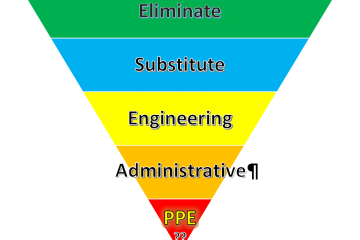
Integrated hierarchy of control
The Hierarchy of Control is safety focused. This article explores how we can adjust it so that it suits quality and environmental management too. We have the answer.
Articles and resources relating to Health and Safety Management, development of OHS management systems and the application of its principles. These articles mainly focus on the application of ISO 45001 and Federals Safety Commission requirements.
The Hierarchy of Control is safety focused. This article explores how we can adjust it so that it suits quality and environmental management too. We have the answer.

The management system standards currently makes more reference to processes than they do procedures. This is because with modern software which utilises workflows and automated machines often a process can be controlled automatically without relying on people and procedures, but what if you don’t have fancy software controlling your processes. Do you still need procedures or can you use processes?
Despite there being little commitment to actually state it, ISO 45001 adopted by Australia in March 2018, will replace AS 4801. There seems to be a mixed message about how likely AS 4801’s withdrawal is. It will happen and we believe it will happen around 2021. This is because 2021 Read more
Is your management system effectively controlled? Are considering purchasing an application to host your system?
Here’s why you should consider Sharepoint first.
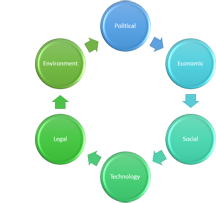
The latest version of the standards now require us to identify opportunities and risks over and above those traditional quality, safety and environmental risks (which most company’s seem to understand). These opportunities and risks extend to the business as a whole, rather than just the delivery of products and services. Read more
Worksafe NSW (formerly WorkCover) is currently targeting companies operating forklift trucks in an effort to reduce the accidents and fatalities which have resulted from the use of forklifts. The initiative is one of the high risk programmes being targeted under the new RoadMap launched in August 2016. Worksafe NSW are hoping to assist companies meet their legal obligations and offer practical advice on how to keep people safe around operating forklift trucks. As such Worksafe NSW are using a checklist for discussion purposes and a copy is available in this post.
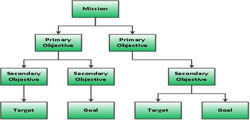
Many of our clients have specific business goals, aims and objectives. So why, as soon as we start talking about management system objectives, do business leaders switch off?
Management system objectives should include the business objectives. The ISO management system standards aim to get leaders to engage with the management system and carefully consider the business’ direction rather than just setting the next financial or growth target.
This workshop article aims to help you hone your objective setting skills.
Read articleUpdated after the release of AS/NZS 3012:2019
The following is an extract from AS/NZS 3760:2010 which provides the Indicative Testing and Inspection Intervals for Electrical Equipment – Portable Appliances and Residual Current Devices (RCD). As these are indicative they can be varied following a risk assessment, but generally, these should be regarded as the minimum requirements.

A great way to keep on top of your safety risks and hazards, document their associated controls and meet the compliance requirements is to keep a Risk Register. Rob Kellock Business Consulting is giving an Excel template away for FREE. Download it from this post. Read article

Since 1992 I’ve been audited to a range of standards including ISO 9001, ISO 14001, AS 4801, OHSAS 18001 and ISO 17025 (sometimes for management systems I developed and sometimes for systems that were thrust upon me). I have conducted factory audits for product marking schemes, certification audits, internal audits and 2nd party audits and over the years I’ve learnt some techniques which I thought may assist you.
I believe there are two alternate approaches to audit management. Both have merit, but the one you choose is dependent on your situation. The ‘lock-down’ approach tends to be adopted where persons are uncomfortable with the audit situation or where the management systems is immature, while the open approach is synonymous with optimising. Read on to find out which approach you should take. Read article